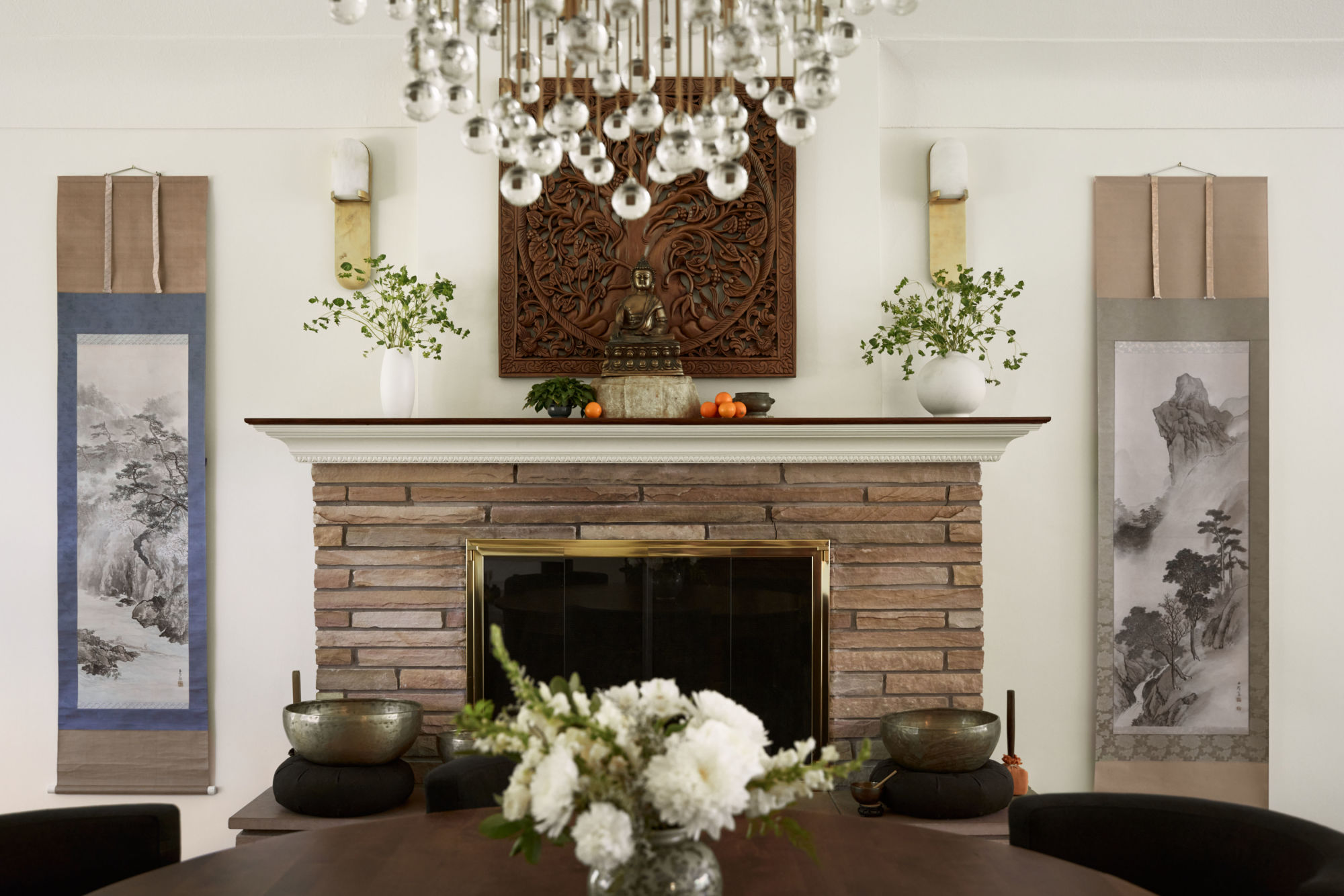
Constructed in 1949, this Tudor Revival residence offers generous volume and enduring character. Over time, however, the openness of the main level had lost spatial hierarchy, resulting in a shared volume without a defined center. The renovation sought to restore balance, clarifying how the primary living spaces relate to one another while respecting the home’s historic presence. Working within the existing footprint, we reorganized the plan through strategic spatial reassignment rather than structural alteration. In collaboration with Liquid Pink Interiors, the dining table now anchors the center of the room, establishing a clear point of gravity within the open plan. The television lounge was relocated to the garden-facing end, creating a quieter, more intimate zone oriented toward the landscape. At the front of the home, the bay window has been returned to a dedicated sitting area, allowing the sequence of spaces to unfold with greater coherence and intention. Subtle architectural interventions unify the main level. Patterned tile establishes continuity between the entry and adjacent bathroom, while a stair runner featuring a delicate cherry blossom motif offers a restrained reference to the homeowners’ Buddhist values. In the refreshed bathroom, a clawfoot tub, chrome fixtures, and handcrafted tile balance period authenticity with renewed warmth and tactility. Golden Revival reflects a measured recalibration rather than a reinvention, an approach that recenters the home through proportion, material continuity, and thoughtful use, allowing heritage and contemporary life to coexist with quiet assurance.